There are several journalists that I LOVE to follow, not only for their good work and wonderful writing but I always know that I will LEARN something from them and in the end be better at what I do.
My latest find...
Taryn Haight's Music Blog on the Huffington Post and her recent piece Trying to Fit a New Song in a Square Hole, which is excerpted below. She touches on a subject that comes up a lot in my work with recording artists - the need to just be who you are, don't over classify ("I'm the next Jay Z") or under classify ("you can't define me, nobody's ever heard music like mine before) and let us help, this is what we do.
Trying to Fit a New Song in a Square Hole
I am hugely critical, and hypocritical, of the way people categorize musicians. It's not that I'm some omniscient music guru or even fully immersed in the industry; I just hate how everyone (myself included) tries to squish some artist into a premade mold in order to make sense of his or her art -- although as humans, it's really only natural.
I'm immediately turned off by a press release boasting some scruffy-chinned boy in a flannel as the next Bob Dylan and I have to consciously stop myself from rolling my eyes when someone plays me a song with any thumping beat and asks, "Would you consider this house or tech-house?"
Honestly, I don't give a shit. And neither do most people listening to it on their en-route-to-work playlists or while dancing through a sea of sweaty people at Webster Hall on a Friday night. Everyone just wants good music -- the kind that moves you and intrigues you and makes you want more. And if it's good, that typically means it's not some square peg we can just plop into a square hole.
Although I know I'm a hater and I try my best not to categorize, there are certain things I can't help (i.e. blurting, "This sounds like Placebo" the first time I ever heard a Silversun Pickups song). There are also those certain few artists who, no matter how hard my head googles for a comparison, can't be traced back to anything that's previously been done.
The interesting phenomenon is that as we create more genres and sub-categories to try to fit these new artists into, we are actually chopping them away until we are so confused and so annoyed that we are left with only two types of music: the good and the bad.
From the time I was just a little peanut in my mom's belly, my parents played the connector role between my brain, my heart and the good kind of music. I was exposed to everything from the Fleetwood Macs to the Michael Jacksons to the stuff my dad wrote and played on guitar during the lull between school and dinner. I was stretching my feet to piano pedals at the age of four and squeaking horse hair against cello strings for hours a day. I was told that music theory was a necessary subject just like math or history and I was told to make up ditties and write out notes when I had no other assignments to practice.
Although my parents are now divorced, living states away from myself and one another, I can credit them for feeding me the musical nutrients necessary to grow into an appreciator of good music, despite its particular species. Like learning anything at such a young age, music became second nature and I became accustomed to needing as much of it as I could get my hands (ears?) on... the more unique, the more exciting.
It's a quality that is easily taken for granted and one that so many other people haven't had the privilege of attaining. For those with similar childhoods, thank your mom and dad, and for those who want to expand their palettes, I challenge you to abandon the categories and ignore what the radio or the songs your friends tell you are hot. Try new genres, or try ignoring genres altogether. Stop putting songs in square holes and start putting them on your iPod to experience rather than categorize.
What I'm listening to now...listen to the rest at http://www.huffingtonpost.com/taryn-haight/trying-to-fit-a-new-song-_b_796088.html
Showing posts with label entertainment publicity. Show all posts
Showing posts with label entertainment publicity. Show all posts
Monday, January 3, 2011


Tuesday, November 2, 2010
The Art of Music Photography
I am always encouraging artists to really pay attention to the photos they're using and most of the time I ask them to "get new photos." It's not a dig or meant to hurt anyone's feelings, it's just that I understand that there is an ART to music photography and that a single image should not only communicate your brand, it should compliment your artistry.
While it starts with conceptualizing and setting up a photo shoot, then relaxing enough to help the photographer capture the image, it ends with that photographer cropping, cleaning and color correcting the final photos BEFORE they go public.
I've had the pleasure of meeting some incredible music (and other) photographers and am pleased to recommend the following:
Diana Levine (New York City)
Rayon Richards (New York City)
Jim Bennett (Seattle)
Terry Creighton (Seattle)
The Fabb Group (Los Angeles)
Spencer Leamer (Seattle)
Check out this great article The Art of Music Photography from MusicianCoaching.com
Jason Gardner is a professional photographer who primarily shoots musicians. He has photographed artists like Manu Chao, Gogol Bordello and Antibalas and captured live performances by Bob Dylan, Dave Matthews, Willie Nelson and Neil Young. His photos have appeared in periodicals like Rolling Stone, Spin, New York Magazine and Time Out among many others.
Ever since someone forwarded me a link from Rock and Roll Confidential’s Hall of Douchebags that features some of the most uninspired band photos ever I knew I had to locate a music photographer to discuss how the pros do it. Please note that no band or photographer mentioned or with a photo credit here has anything to do with such Douchebaggery…
http://musiciancoaching.com/music-career/music-photography/
While it starts with conceptualizing and setting up a photo shoot, then relaxing enough to help the photographer capture the image, it ends with that photographer cropping, cleaning and color correcting the final photos BEFORE they go public.
I've had the pleasure of meeting some incredible music (and other) photographers and am pleased to recommend the following:
Diana Levine (New York City)
Rayon Richards (New York City)
Jim Bennett (Seattle)
Terry Creighton (Seattle)
The Fabb Group (Los Angeles)
Spencer Leamer (Seattle)
Check out this great article The Art of Music Photography from MusicianCoaching.com
Jason Gardner is a professional photographer who primarily shoots musicians. He has photographed artists like Manu Chao, Gogol Bordello and Antibalas and captured live performances by Bob Dylan, Dave Matthews, Willie Nelson and Neil Young. His photos have appeared in periodicals like Rolling Stone, Spin, New York Magazine and Time Out among many others.
Ever since someone forwarded me a link from Rock and Roll Confidential’s Hall of Douchebags that features some of the most uninspired band photos ever I knew I had to locate a music photographer to discuss how the pros do it. Please note that no band or photographer mentioned or with a photo credit here has anything to do with such Douchebaggery…
http://musiciancoaching.com/music-career/music-photography/
Sunday, July 11, 2010
Photos Are NOT Frivolous
Your photos are not frivolous, in fact, as the expression goes they "speak a thousand words!" Today, when everyone has mobile phones and digital cameras readily available, we have less control over how photos are taken and where they appear (sometimes a nightmare for me, the publicist) but as an artist or public figure, here are a few tips and tricks to make YOUR photos more appealing!
Take a minute (1:23 actually) to learn from Sardi Klein, longtime NYC photographer and professor at The School of Visual Arts and Pratt, in this informative video.
http://www.dailycandy.com/online/video/how-to/84722/Expert-Tips-for-Looking-Good-in-Photos
"Shiny forehead, freak grimace, bulging eyes — you’ve got an uncanny ability to ruin a photo. And thanks to Facebook tagging, the entire world can witness your awkward mugging until the end of time."
Take a minute (1:23 actually) to learn from Sardi Klein, longtime NYC photographer and professor at The School of Visual Arts and Pratt, in this informative video.
http://www.dailycandy.com/online/video/how-to/84722/Expert-Tips-for-Looking-Good-in-Photos
"Shiny forehead, freak grimace, bulging eyes — you’ve got an uncanny ability to ruin a photo. And thanks to Facebook tagging, the entire world can witness your awkward mugging until the end of time."
Thursday, February 11, 2010
How to Leverage Media Coverage - 5 Easy Tips
See the original article at http://biznik.com/articles/how-to-leverage-media-coverage-5-easy-tips?utm_source=articles&utm_medium=email&utm_campaign=2010-02-10
You’ve managed to get the media to cover you! Editorial press is not easy to get. When it does happen, it’s exciting! Here are 5 easy tips on how to leverage media coverage far beyond the first time it appears.
Written 2 days ago, read 354 times since then.
Share Share
So, through hard work or good luck, you’ve managed to get the media to cover you, your business, or your event. Fantastic! Editorial press is not easy to get, and when it does happen, it’s exciting! Big or small, long or short, local weekly paper or national magazine, media coverage is a testament to your accomplishments.
Once article has been read or the show listened to or watched…now what do you do with it? Did you know that press coverage appearing for the first time is only the tip of the iceberg in how you can reap long-term benefits from just one media placement? Here area five easy, cost-effective tips for how to maximize and leverage your editorial media coverage:
1. Read It Objectively – Many businesses owners are so excited about their press coverage that they don’t really look at it objectively. Try to review coverage impartially, without bias – you’ll often get invaluable insights from what journalists have to say. A neutral look may tell you the coverage is even better, or not quite as positive, as first thought. Look for positive key words and phrases the reporter used that you can pull as brief quotes to use in the future.
2. Post Coverage On Your Website – Having a Press Page featuring media coverage is an important part of a professional website. Showing off editorial placements gives your company credibility, both with those who did and did not see the original feature. Use your press page announce upcoming placements too – i.e. “Look for Joe’s Shoes in the upcoming issue of Fabulous Finds magazine!”
3. Include It In Collateral – When designing brochures, flyers, postcards or other printed marketing materials, consider adding images or quotes from the press. It adds tremendous credibility, and this is at least one instance when it is okay to brag!
4. Frame It – Whether it’s a couple of paragraphs in the weekly paper, a feature in People magazine, or a byline article for a trade journal, people are excited by seeing friends, acquaintances and business associates in the news. Seeing framed articles also builds confidence in consumers when they visit your office. There is no need to spend top dollar on a professional framing job, but do buy a nice frame to display your news. The way it is displayed is part of your company image and you don’t want it to say you are cheap!
5. Talk About It in Person and Online– Make the news part of your elevator speech or introductory message points at networking and speaking events. Include it in a blog post, tweet and e-newsletter too! People love hearing success stories and sharing your media success is an impressive and interesting way to begin a conversation.
Most of these suggestions will also work to promote the news of awards you have won. Whatever you decide to do with your media coverage, don’t keep it a secret! Display it; provide copies of it, create marketing materials featuring it, send it to vendors, distributors and consumers. The key to marketing is to keep Spreading the Good News About You!
Learn more about the author, Erika Montgomery.
You’ve managed to get the media to cover you! Editorial press is not easy to get. When it does happen, it’s exciting! Here are 5 easy tips on how to leverage media coverage far beyond the first time it appears.
Written 2 days ago, read 354 times since then.
Share Share
So, through hard work or good luck, you’ve managed to get the media to cover you, your business, or your event. Fantastic! Editorial press is not easy to get, and when it does happen, it’s exciting! Big or small, long or short, local weekly paper or national magazine, media coverage is a testament to your accomplishments.
Once article has been read or the show listened to or watched…now what do you do with it? Did you know that press coverage appearing for the first time is only the tip of the iceberg in how you can reap long-term benefits from just one media placement? Here area five easy, cost-effective tips for how to maximize and leverage your editorial media coverage:
1. Read It Objectively – Many businesses owners are so excited about their press coverage that they don’t really look at it objectively. Try to review coverage impartially, without bias – you’ll often get invaluable insights from what journalists have to say. A neutral look may tell you the coverage is even better, or not quite as positive, as first thought. Look for positive key words and phrases the reporter used that you can pull as brief quotes to use in the future.
2. Post Coverage On Your Website – Having a Press Page featuring media coverage is an important part of a professional website. Showing off editorial placements gives your company credibility, both with those who did and did not see the original feature. Use your press page announce upcoming placements too – i.e. “Look for Joe’s Shoes in the upcoming issue of Fabulous Finds magazine!”
3. Include It In Collateral – When designing brochures, flyers, postcards or other printed marketing materials, consider adding images or quotes from the press. It adds tremendous credibility, and this is at least one instance when it is okay to brag!
4. Frame It – Whether it’s a couple of paragraphs in the weekly paper, a feature in People magazine, or a byline article for a trade journal, people are excited by seeing friends, acquaintances and business associates in the news. Seeing framed articles also builds confidence in consumers when they visit your office. There is no need to spend top dollar on a professional framing job, but do buy a nice frame to display your news. The way it is displayed is part of your company image and you don’t want it to say you are cheap!
5. Talk About It in Person and Online– Make the news part of your elevator speech or introductory message points at networking and speaking events. Include it in a blog post, tweet and e-newsletter too! People love hearing success stories and sharing your media success is an impressive and interesting way to begin a conversation.
Most of these suggestions will also work to promote the news of awards you have won. Whatever you decide to do with your media coverage, don’t keep it a secret! Display it; provide copies of it, create marketing materials featuring it, send it to vendors, distributors and consumers. The key to marketing is to keep Spreading the Good News About You!
Learn more about the author, Erika Montgomery.
Tuesday, December 1, 2009
The Art of a Good Newsletter
Sending a newsletter on a regular basis is essential. However, you must pay attention to quality, content and design if you want people to come back for more.
1. Spend time figuring out what you want YOUR newsletter to look like and say.
2. Identify your audience(s).
3. Develop subject line(s) that appeal to your audience(s).
4. If you have no news to report, create it or use your newsletter to promote a colleague's achievement.
5. Be sure to include social networking.
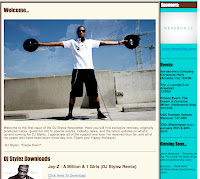
Today, I received a newsletter from DJ Stylez that I'd like to share as an example.


BSM Notes:
-It includes a lot of information: events, news, downloads, etc. but is not overwhelming and easy to scan
-It includes a space for sponsors (making it an asset not just a means of communication)
-Small amount of text with links to read more information.
-Has a forward to a friend feature
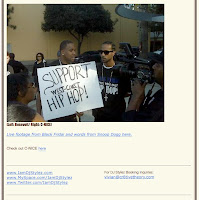
-They created their own news with the Power 106 protest.
-It does NOT have a "follow me on social networking" instruction
-The subject line doesn't really do it justice - it simply says "Brand New Jay-Z Remix" which can only really appeal to a singular audience, I almost erased it but glad I didn't because the Power 106 protest was worth the read.
-It's NOT hosted anywhere externally so I can't give you a link to read the newsletter in it's entirety. It's a good idea to host the newsletter in your blog.
-Bottom line is 1. Now I know how DJ Stylez is and 2. I'll read future communication from him
1. Spend time figuring out what you want YOUR newsletter to look like and say.
2. Identify your audience(s).
3. Develop subject line(s) that appeal to your audience(s).
4. If you have no news to report, create it or use your newsletter to promote a colleague's achievement.
5. Be sure to include social networking.
Today, I received a newsletter from DJ Stylez that I'd like to share as an example.


BSM Notes:
-It includes a lot of information: events, news, downloads, etc. but is not overwhelming and easy to scan
-It includes a space for sponsors (making it an asset not just a means of communication)
-Small amount of text with links to read more information.
-Has a forward to a friend feature
-They created their own news with the Power 106 protest.
-It does NOT have a "follow me on social networking" instruction
-The subject line doesn't really do it justice - it simply says "Brand New Jay-Z Remix" which can only really appeal to a singular audience, I almost erased it but glad I didn't because the Power 106 protest was worth the read.
-It's NOT hosted anywhere externally so I can't give you a link to read the newsletter in it's entirety. It's a good idea to host the newsletter in your blog.
-Bottom line is 1. Now I know how DJ Stylez is and 2. I'll read future communication from him
Friday, October 2, 2009
Use Video to Your Advantage
Today video is so very accessible and you should be using it to your advantage at every step of your career. Whether you are performing, making new product, at a rehearsal or just introducing yourself - use video and YouTube at every turn.
First up, if you don't have a video camera, I suggest picking up a Flip Cam. They are small, light weight, inexpensive and can be plugged into any computer for quick uploads. They're available at any electronics or office supply store or online at http://www.theflip.com/
Secondly, a recent article by Ksenia Oustiougova a simple and great "how to" for recording a promotional video for online use.
"More and more businesses are realizing the importance of having a video presence online, but often lack the knowledge on how to do it right. We will give you points and advice on how to create the most effective video – doesn’t matter if you do it yourself or pay someone to do it for you.
First, don’t film your own talking head, show your prospect in pain:
* Talking head is a leftover from broadcast TV where the viewer was passive. In contrast, computer users create their own experiences, thus being active.
* In an eye-tracing study, viewers of a talking head video spent most of their attention outside the video (on road sign in the background, player controls, etc.); in videos of moving objects and in animations the focus stays sharply on the subject.
* Historically in movie making, by showing the main character in pain you create empathy and anticipation in the audience; by beginning with an explanation of who you are, you bore your audience to tears – they don’t care for you.
Second, don’t tell what you do, show what you do:
* This is a classic for all stories, from 1 minute videos to 2 hour movies. “Telling” means you gave dry information and haven’t involved the viewer emotionally; “showing” means you used specific details to describe the action, letting the viewer experience it - and that makes the viewer believe in your story.
* Compare the following script examples for effectiveness: “We are experts at automating enterprise contract management” VS “A sleek vacuum-like machine (bearing company logo) rolls onto a landfill full of old paper, sucks it all up, spits out neat numbered stacks on the now clean ground.”
Third, leave the last frame on a call to action for a few seconds:
* Don’t leave it on black background, do leave your website on the bottom, a phone number to call, and an e-mail to contact you at.
* Don’t leave just an 800 number with an answering machine on it, rather choose something where people can interact with you right away, like a twitter account name, a Facebook page or an e-mail.
Fourth, do these little technical details correctly:
* Put a play button on the player, so people know this is a video and not just an image (you’d be surprised how many people don't do this - as simple as it sounds).
* Put the length of the video into the player or next to it, so people know if it is 1 minute, 20 minutes, or 1 hour, and can make a decision.
* Do NOT put the video on autoplay, allow people to play and pause the video as they want.
* Have a volume control button, people hate it when they can’t control the sound.
* Best, put video on YouTube and embed the code into your web site page instead of putting it up on your own site – this will let people share it easily. And, YouTube player already has all the controls built in - volume, play button, length of the video - so this will make the job easier for you."
Lastly, you can find examples of good videos all over and I suggest taking some time to do just that. Put a list together of your favorites and why they strike you.
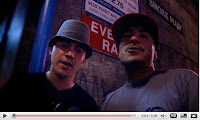
Here are some from BSM:
href=http://www.youtube.com/watch?v=tlO7eJD3tpQ&feature=channel_page

href=http://www.batanga.com/en/videos/entrevista-de-cerca-con-carmelina
Happy Planning!
-BSM
First up, if you don't have a video camera, I suggest picking up a Flip Cam. They are small, light weight, inexpensive and can be plugged into any computer for quick uploads. They're available at any electronics or office supply store or online at http://www.theflip.com/
Secondly, a recent article by Ksenia Oustiougova a simple and great "how to" for recording a promotional video for online use.
"More and more businesses are realizing the importance of having a video presence online, but often lack the knowledge on how to do it right. We will give you points and advice on how to create the most effective video – doesn’t matter if you do it yourself or pay someone to do it for you.
First, don’t film your own talking head, show your prospect in pain:
* Talking head is a leftover from broadcast TV where the viewer was passive. In contrast, computer users create their own experiences, thus being active.
* In an eye-tracing study, viewers of a talking head video spent most of their attention outside the video (on road sign in the background, player controls, etc.); in videos of moving objects and in animations the focus stays sharply on the subject.
* Historically in movie making, by showing the main character in pain you create empathy and anticipation in the audience; by beginning with an explanation of who you are, you bore your audience to tears – they don’t care for you.
Second, don’t tell what you do, show what you do:
* This is a classic for all stories, from 1 minute videos to 2 hour movies. “Telling” means you gave dry information and haven’t involved the viewer emotionally; “showing” means you used specific details to describe the action, letting the viewer experience it - and that makes the viewer believe in your story.
* Compare the following script examples for effectiveness: “We are experts at automating enterprise contract management” VS “A sleek vacuum-like machine (bearing company logo) rolls onto a landfill full of old paper, sucks it all up, spits out neat numbered stacks on the now clean ground.”
Third, leave the last frame on a call to action for a few seconds:
* Don’t leave it on black background, do leave your website on the bottom, a phone number to call, and an e-mail to contact you at.
* Don’t leave just an 800 number with an answering machine on it, rather choose something where people can interact with you right away, like a twitter account name, a Facebook page or an e-mail.
Fourth, do these little technical details correctly:
* Put a play button on the player, so people know this is a video and not just an image (you’d be surprised how many people don't do this - as simple as it sounds).
* Put the length of the video into the player or next to it, so people know if it is 1 minute, 20 minutes, or 1 hour, and can make a decision.
* Do NOT put the video on autoplay, allow people to play and pause the video as they want.
* Have a volume control button, people hate it when they can’t control the sound.
* Best, put video on YouTube and embed the code into your web site page instead of putting it up on your own site – this will let people share it easily. And, YouTube player already has all the controls built in - volume, play button, length of the video - so this will make the job easier for you."
Lastly, you can find examples of good videos all over and I suggest taking some time to do just that. Put a list together of your favorites and why they strike you.
Here are some from BSM:

href=http://www.youtube.com/watch?v=tlO7eJD3tpQ&feature=channel_page

href=http://www.batanga.com/en/videos/entrevista-de-cerca-con-carmelina
Happy Planning!
-BSM
Subscribe to:
Posts (Atom)